Wondering whether a Dallas condo or townhome is the smarter fit for your lifestyle? You are not alone. Many buyers start by comparing looks and price, but in Dallas, the bigger difference often comes down to ownership structure, maintenance responsibility, insurance, and financing. If you want to make a confident decision, the key is understanding what you are actually buying. Let’s dive in.
Condo vs townhome in Dallas
At first glance, condos and townhomes can seem very similar. Both can offer attached living, shared amenities, and a lower-maintenance option than a detached house.
In Dallas, though, the label on the listing does not tell the full story. What matters most is the legal structure of the property and the association documents that govern it.
What a condo means in Texas
Under Texas law, a condominium is real property where part of the property is owned separately and the rest is owned in common by unit owners. That means you usually own your individual unit, while common areas are shared through the association.
In a condo resale, Texas requires the seller to provide key documents. These include the declaration, bylaws, association rules, and a resale certificate with details on the budget, assessments, reserves, unpaid amounts, and approved capital expenditures.
What a townhome means in practice
A townhome describes a style of home, not always a legal ownership type. In Dallas, a townhome may be a non-condo attached home with mandatory HOA membership, or it may actually be governed as a condominium.
That is why you should not rely on the word townhome alone. The deed, governing documents, and contract path are what tell you whether the home functions like a condo or like a fee-simple attached home.
Why the legal setup matters
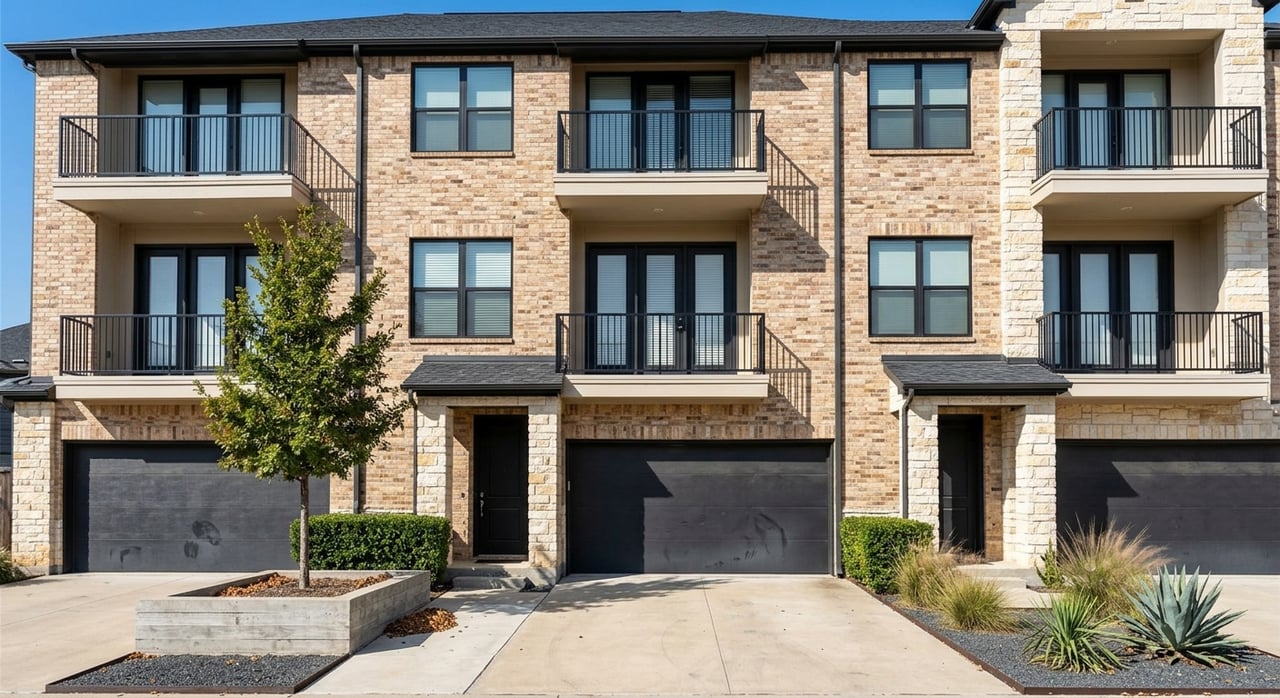
Two attached homes can look almost identical from the street and still involve very different rules, costs, and closing steps. That difference can affect your monthly budget, your insurance choices, and even whether your lender needs extra project approval.
For buyers in Dallas, this is one of the biggest reasons to slow down and review the paperwork early. A little clarity up front can prevent expensive surprises later.
Condo contracts and disclosures
Texas Real Estate Commission forms treat condos differently from other homes. Condos use a separate residential condominium resale contract, and Texas condo resale rules require delivery of documents that show how the association operates financially and administratively.
That document package can give you a clearer picture of the project’s health before closing. You can review association rules, reserve levels, unpaid assessments, and planned capital spending rather than guessing from the monthly dues alone.
Non-condo townhome paperwork
For attached homes with mandatory HOA membership that are not condominiums, the paper trail is different. These properties generally follow the subdivision-information framework under Texas Property Code Chapter 207 and use the TREC addendum for mandatory property owners association membership.
The practical takeaway is simple. If you are comparing Dallas townhomes, ask whether the property is legally a condo or a non-condo attached home before you compare dues, maintenance, or financing.
Maintenance and monthly costs
For many buyers, the day-to-day ownership experience matters just as much as the purchase price. This is where condos and townhomes often start to feel very different.
Condos often bundle more upkeep
Condos usually place more exterior and common-area responsibility within the association structure. That can mean less direct maintenance responsibility for you, especially for building exteriors and shared spaces.
That convenience can be a real advantage if you want simpler ownership in a denser Dallas setting. But it also means your monthly dues may reflect shared upkeep, reserve funding, and common expenses.
Townhomes may give you more direct responsibility
Townhomes often feel more house-like, but that does not automatically mean lower costs or fewer rules. The real question is which repairs and insurance obligations belong to you and which belong to the HOA.
Some attached homes leave more responsibility with the owner for exterior elements, roof components, or private-use areas. Others bundle more through the HOA. You need the governing documents to know for sure.
What to ask about dues
Before you move forward on either property type, ask for a clear breakdown of what the monthly dues actually cover. Focus on practical items like:
- Exterior maintenance
- Roof responsibility
- Common area upkeep
- Insurance carried by the association
- Reserve funding
- Special assessments or planned capital projects
A lower HOA fee is not always the better deal. If fewer costs are bundled into the dues, you may be taking on more repair and insurance responsibility yourself.
Insurance can look very different
Insurance is one of the most overlooked parts of the condo-versus-townhome decision. In Texas, what you need depends heavily on the ownership structure and the association agreement.
Condo insurance basics
According to the Texas Office of Public Insurance Counsel, condo insurance usually covers the inside of the condo, personal property, additional living expenses, and liability. It usually does not cover the outside of the condo or the building itself.
That said, some association agreements can shift responsibility for certain items back to the owner. So even with a condo, you need to read the association documents carefully instead of assuming the HOA covers everything outside your walls.
Why loss assessment coverage matters
OPIC also notes that loss assessment coverage can help pay an HOA assessment tied to a covered loss, up to your policy limit. That matters because condo resale documents in Texas disclose things like reserves, unpaid assessments, and approved capital expenditures.
If a project faces a major covered loss or rising shared costs, that can affect what owners may be asked to pay. It is another reason to look beyond the listing price and into the project’s financial picture.
Flood coverage is separate
Buyers should also remember that flood damage is not covered by most residential property policies. If flood risk is part of your property search, that is a separate conversation to have early.
Financing may not be the same
This is where many Dallas buyers get caught off guard. A condo and a townhome may look similar online, but the lender may treat them very differently.
Condo financing can involve project review
Fannie Mae uses Condo Project Manager to certify condominium projects. It notes that projects can be ineligible because of issues like critical repairs, inadequate insurance, pending significant litigation, or hotel-style or short-term-rental-style operations.
That means your loan approval may depend on more than your personal finances. The project itself may also need to meet lender standards.
Townhomes may have a different underwriting path
For non-condo attached homes with mandatory HOA membership, the disclosure and contract path is different from a condominium resale. In practical terms, that can make a townhome easier to compare with single-family homes when the legal structure is fee simple rather than condo-based.
The main point is not that one is always easier. It is that you should expect the financing process to follow the legal structure, not the exterior style.
Dallas market context matters
Dallas is not just a detached-home market. The city’s current planning framework makes room for a wider mix of housing choices, including condos, townhomes, duplexes, and other attached housing in denser settings.
ForwardDallas 2.0, adopted by City Council in September 2024, describes a long-range vision with a focus on housing choice and access. City planning and housing materials also include attached homeownership options as part of Dallas’s broader housing mix.
Where condos and townhomes fit in Dallas
Dallas zoning regulates land use, height, setbacks, lot size, density, lot coverage, and floor area ratio. In real terms, that means where attached housing can be built depends heavily on the site and zoning context.
For buyers, the takeaway is helpful. If you want lower-maintenance living, urban convenience, or an attached-home format, you are looking at a property type that fits the city’s current housing direction.
Which option fits you best?
The right answer depends less on style and more on how you want to live, what responsibilities you are comfortable with, and how much complexity you want in the ownership structure.
A condo may fit you best if
- You want less exterior maintenance responsibility
- You are comfortable with shared ownership and HOA governance
- You prefer a more bundled ownership structure
- You want a property type often associated with denser Dallas living patterns
A townhome may fit you best if
- You want a more house-like feel in an attached format
- You want to compare options more closely to single-family ownership
- You are willing to verify the maintenance split carefully
- You want more direct control, depending on the deed and HOA setup
Smart questions to ask before you buy
Whether you are leaning condo or townhome, ask these questions before you make an offer:
- Is this property legally a condominium or a non-condo attached home?
- What do the HOA dues cover?
- Which parts of the building are shared and which are owner-maintained?
- What insurance does the association carry?
- Are there reserves, unpaid assessments, or approved capital projects?
- Will the lender require condo project review or extra documentation?
- Which resale documents should I review before moving forward?
The more clearly you answer those questions, the easier it becomes to choose the right fit for your budget and lifestyle.
If you are comparing condos and townhomes in Dallas, it helps to have someone who can sort through the documents, explain the ownership structure, and help you evaluate the real monthly cost beyond the listing price. When you are ready for clear, local guidance, connect with Andrew Bradshaw.
FAQs
What is the main difference between a condo and a townhome in Dallas?
- The biggest difference is often the legal ownership structure, not the exterior style. A condo involves separate ownership of a unit plus shared ownership of common areas, while a townhome may be either a condo or a non-condo attached home depending on the documents.
What do HOA dues usually cover for a Dallas condo or townhome?
- Coverage varies by property, but buyers should confirm whether dues include items like exterior maintenance, roof responsibility, common area upkeep, insurance, reserve funding, and capital projects.
Do Dallas condos require different paperwork than townhomes?
- Yes. Texas condo resales require documents like the declaration, bylaws, association rules, and a resale certificate, while non-condo attached homes with mandatory HOA membership follow a different disclosure framework.
Is condo insurance different from townhome insurance in Texas?
- Often, yes. Condo insurance usually covers the interior, personal property, additional living expenses, and liability, while the association typically covers the building exterior, subject to the association agreement.
Can financing be harder for a Dallas condo than a townhome?
- It can be. Condo financing may require project-level review, and a project can be affected by issues such as critical repairs, inadequate insurance, significant litigation, or certain operational risks.
Why does Dallas have so many condos and townhomes in certain areas?
- Dallas planning documents support a wider range of housing choices, and attached housing is part of the city’s broader strategy for housing access and denser residential development.